
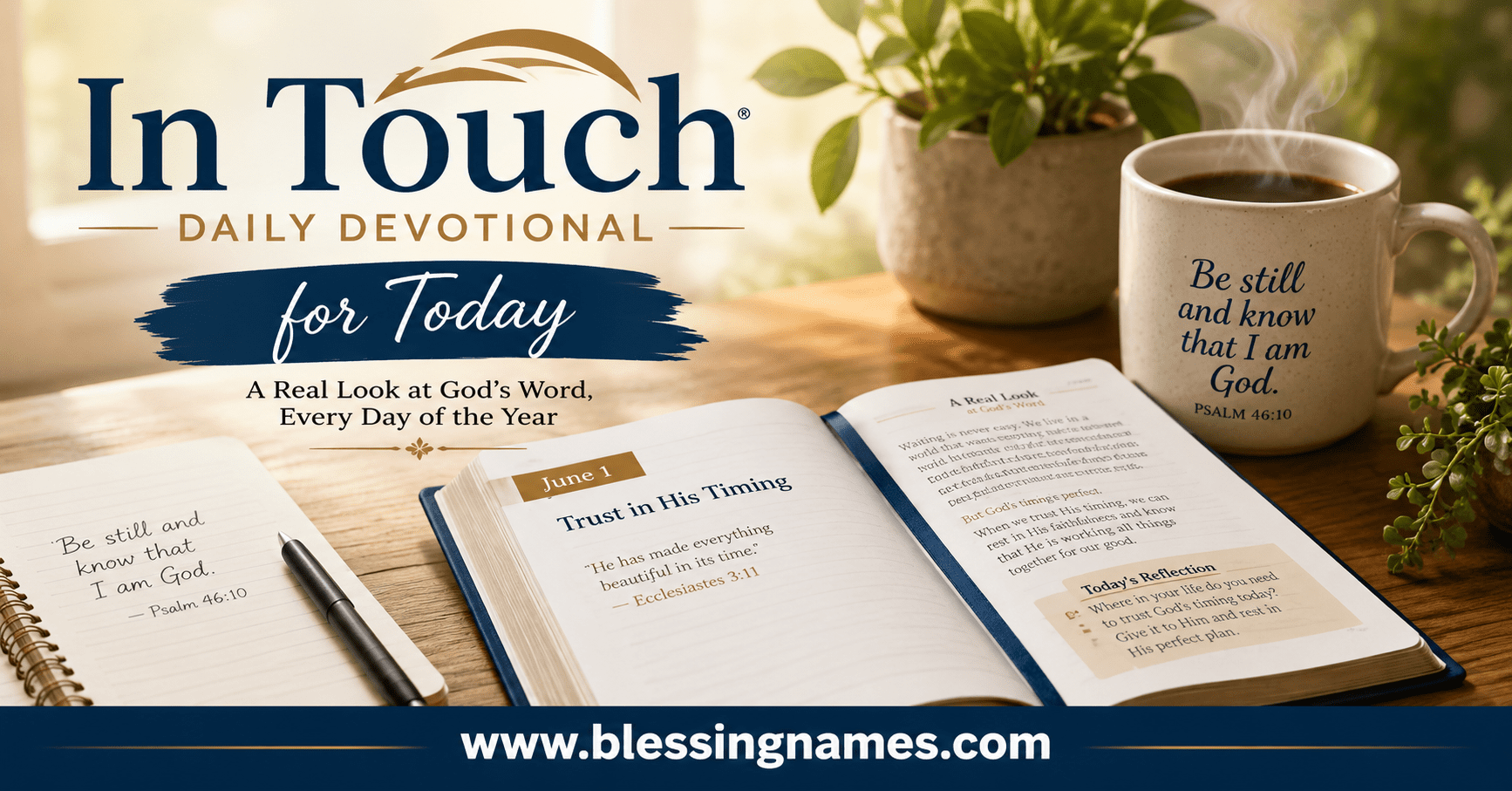
Most people don’t open a devotional because they’re having a great day. They open it because something feels heavy, unclear, or unfinished – and they’re looking for a few minutes of stillness before the day pulls them back under. The in touch daily devotional for today exists for exactly that moment. It’s not about religious performance or checking a box; it’s about pausing long enough to remember who you are before the world tells you who to be. This kind of daily reflection works because it meets you where you actually are – tired, hopeful, frustrated, grateful, or some confusing mix of all four – and gently points you toward something steadier than your mood.
If you’ve ever found yourself reaching for a Thursday morning prayer for peace just to get through a hard stretch of the week, you already understand the instinct behind a daily devotional. It’s the same need, just spread across every morning instead of one.
Why a Daily Devotional Still Matters in an Overstimulated Life
There’s a reason this practice has survived for generations even as everything else about daily life has changed. A devotional isn’t trying to compete with your notifications or your to-do list. It’s offering something different: a few minutes where nothing is being sold to you, nothing is asking for your reaction, and no one needs anything from you right away. That kind of space is rare now, and rarity makes it valuable.
People often underestimate how much their inner world is shaped by the first fifteen minutes of the morning. If you wake up and immediately scroll, argue internally about yesterday’s mistake, or start mentally drafting your schedule, your nervous system never gets a chance to settle. A short devotional interrupts that pattern. It doesn’t fix your day, but it gives your mind a different starting point – one rooted in meaning instead of urgency.
Twenty reflections for starting the day with intention:
- Today, I choose to begin before the noise begins.
- I don’t need to have it all figured out by sunrise.
- My worth isn’t decided by how productive I am today.
- I can be calm and still get things done.
- This morning matters, even if it’s ordinary.
- I’m allowed to start slow.
- Peace can be a decision, not just a feeling.
- I don’t have to carry yesterday into today.
- Small moments of stillness are not wasted time.
- I can face today without pretending I’m not tired.
- My faith doesn’t need to be loud to be real.
- I’m not behind – I’m exactly where I need to be.
- Today deserves my attention, not my anxiety.
- I can hold hope and uncertainty at the same time.
- Growth doesn’t always feel comfortable, and that’s okay.
- I’m allowed to take today one hour at a time.
- My mind needs rest as much as my body does.
- I can choose gratitude even on a hard morning.
- This devotional is for me, not for anyone watching.
- I’m showing up for myself, and that’s enough.
What Makes a Devotional Feel Personal Instead of Generic
A lot of spiritual content online feels interchangeable – the same phrases, the same stock encouragement, the same forced positivity. What separates a devotional that actually helps from one that just fills space is honesty. The good ones don’t pretend life is simple. They acknowledge that faith and doubt often sit in the same room, that gratitude and grief can exist on the same Tuesday, and that growth usually feels like discomfort before it feels like progress.
When a devotional speaks to real emotional texture – the kind of tiredness that sleep doesn’t fix, the quiet worry about money or family, the sense of being stretched too thin — it stops being background noise. It becomes a conversation. That’s the difference between reading words and actually being met by them.
This is the same honesty you’ll find in deep Thursday morning prayer wishes for peace and healing, where the goal isn’t to sound polished but to sound true.
Twenty reflections on what feels personal and true:
- I don’t have to pretend everything is fine to be okay.
- My struggles don’t disqualify me from peace.
- I can be a work in progress and still be loved.
- Honesty with myself is the first step toward healing.
- I’m allowed to feel two things at once.
- My pace doesn’t have to match anyone else’s.
- I can ask hard questions without losing my faith.
- Some days, just showing up is the victory.
- I don’t need to perform strength I don’t feel.
- My quiet struggles are still valid.
- I can be tired and still be moving forward.
- Real growth often happens in private.
- I’m not the only one who feels this way.
- My story isn’t finished, even when it feels stuck.
- I can hold space for both hope and frustration.
- I don’t have to explain my pace to anyone.
- Being human is part of the process, not a failure of it.
- I can trust the timing even when I don’t understand it.
- My emotions don’t need to be fixed immediately.
- I’m allowed to take this one day at a time.
The Role of Scripture and Reflection in Everyday Decisions
One thing that often gets lost in modern self-help culture is the idea that wisdom doesn’t have to be invented fresh every day. Scripture-based reflection works because it’s been tested across generations of people facing the same basic human- fear, loss, pride, doubt, love, and the search for purpose. Reading a short passage and sitting with it for a few minutes isn’t about memorizing verses; it’s about letting an old truth meet a new situation.
This matters most during ordinary decisions, not dramatic ones. Most people don’t face a single defining moment that changes everything. They face hundreds of small choices – how to respond to a frustrating coworker, whether to be patient with a child who’s having a hard morning, how to handle disappointment without becoming bitter.
If you want a few of these to keep close at hand, this list of short prayers for blessings works well as quick touchpoints throughout a busy day.
Twenty reflections for everyday decision-making:
- I can choose patience even when I don’t feel patient.
- My response matters more than the situation itself.
- I don’t have to win every disagreement.
- Kindness is still a strength, even when it’s hard.
- I can disagree with someone and still respect them.
- My reactions today shape my character tomorrow.
- I’m allowed to walk away from unnecessary conflict.
- Wisdom often looks like restraint.
- I can choose grace over being right.
- Small choices build the life I’m living.
- I don’t need to control every outcome.
- I can be firm and kind at the same time.
- My values matter more than my comfort.
- I’m capable of handling today’s decisions.
- I can pause before reacting.
- Integrity matters even when no one’s watching.
- I don’t have to rush every decision.
- My choices today are seeds for tomorrow.
- I can trust my judgment without needing certainty.
- I’m allowed to choose differently than I have before.
Finding Hope When the Day Feels Heavier Than Usual
Some mornings, no devotional feels like enough – and that’s worth saying out loud, because pretending otherwise helps no one. There are days when grief, exhaustion, financial pressure, or uncertainty about the future sit so heavily that a short reading feels almost too small to matter. On those days, the value of the in touch daily devotional for today isn’t that it removes the weight. It’s that it reminds you the weight isn’t the whole story.
Hope, in its most honest form, isn’t the absence of difficulty. It’s the quiet decision to keep going anyway, trusting that today’s hard moment isn’t the final word. That kind of hope doesn’t need to be loud or certain. It just needs to be present, even faintly, like a pilot light that hasn’t gone out.
Twenty reflections for heavy days:
- I’m allowed to struggle and still have hope.
- This feeling is real, but it’s not permanent.
- I don’t have to be okay right now to be okay eventually.
- My hard days don’t erase my progress.
- I can ask for help without feeling weak.
- Today’s pain doesn’t define my whole story.
- I’m allowed to grieve and grow at the same time.
- Rest is sometimes the most productive thing I can do.
- I don’t have to carry this alone.
- My feelings are valid, even if they’re hard to explain.
- I can take today slower than usual.
- This moment is heavy, but I’m still here.
- I’m allowed to not have answers right now.
- My strength includes the ability to rest.
- I can be gentle with myself today.
- Hard seasons don’t last forever, even when they feel endless.
- I’m allowed to lean on others.
- My faith can hold doubt and pain.
- I don’t have to fix everything today.
- I’m still moving forward, even slowly.
Building a Habit That Actually Lasts
Most people don’t fail at daily devotionals because the content is wrong – they fail because the habit is built on motivation instead of structure. Motivation is unreliable; it shows up some days and disappears on others. What actually works is attaching the practice to something you already do without thinking – the first cup of coffee, the drive to work, the few minutes before checking your phone.
The other overlooked piece is forgiveness. Missing a day isn’t failure. It’s just a gap, and gaps are normal in any habit worth keeping. The people who stick with daily reflection long-term aren’t the ones who never miss – they’re the ones who don’t quit just because they missed.
If you’re someone who likes to mark the start of a new season of consistency, browsing through heartfelt New Year blessings can be a meaningful way to reset your intentions, even outside of January.
Twenty reflections for building consistency:
- Missing a day doesn’t mean I’ve failed.
- I can start again without guilt.
- Small consistency matters more than occasional intensity.
- I’m building a habit, not chasing perfection.
- I can be patient with my own growth.
- This practice doesn’t need to be long to be meaningful.
- I’m allowed to adjust how I do this.
- Showing up imperfectly is still showing up.
- My routine can be simple and still work.
- I don’t have to compare my consistency to others.
- Progress looks different on different days.
- I can return to this practice anytime.
- My effort counts, even on inconsistent days.
- I’m capable of building lasting habits.
- This is for my benefit, not for show.
- I can make this practice fit my life, not the other way around.
- Small steps today add up over time.
- I don’t need a perfect routine to grow.
- I’m allowed to start small and build from there.
- Consistency is kindness toward my future self.
Final Thoughts
The in touch daily devotional for today isn’t meant to be a performance, a productivity hack, or another item on your list. It’s meant to be a quiet anchor – something steady you can return to no matter what kind of morning you’re having. Some days it will feel deeply meaningful. Other days it will feel like just words on a page, and that’s okay too. The value isn’t always immediate. Sometimes it’s cumulative, built slowly through small mornings that quietly shape who you’re becoming.
What matters most is that you keep showing up – not perfectly, not every single day, but often enough that reflection becomes part of how you live, not just something you do when things fall apart. And if you find midweek mornings the hardest, these Wednesday encouragement quotes make for a fitting companion piece to keep your momentum going until the weekend arrives.
Frequently Asked Questions (FAQs)
1. What is the In Touch Daily Devotional for Today?
The In Touch Daily Devotional for Today is a daily spiritual reflection designed to help readers grow in faith, understand biblical principles, and apply God’s truth to everyday life. It offers encouragement, wisdom, and practical guidance for daily challenges.
2. How can a daily devotional strengthen my faith?
A daily devotional creates a consistent habit of reflection, prayer, and Scripture reading. Over time, these small moments help deepen your relationship with God and strengthen your trust in His guidance.
3. How long does it take to read a daily devotional?
Most daily devotionals can be read in just a few minutes. However, many readers spend additional time praying, journaling, or reflecting on the message to gain a deeper understanding.
4. Can I read a devotional even if I am new to faith?
Yes. Daily devotionals are written for people at different stages of their spiritual journey. Whether you are new to Christianity or have been a believer for years, a devotional can provide valuable encouragement and insight.
5. What should I do after reading a devotional?
After reading, take a few moments to reflect on the message. Consider how it applies to your life, spend time in prayer, and think about one practical action you can take during the day.
6. Why is consistency important when reading devotionals?
Consistency helps build spiritual habits that support long-term growth. Reading a devotional regularly can help keep your focus on faith, even during busy or challenging seasons.

Asif Blogger is a passionate content writer and SEO specialist with hands-on experience in On-Page SEO, Off-Page SEO, and Technical SEO. He crafts heartfelt wishes, blessings, prayers, and quotes that connect with readers on a deeper level. With a strong background in guest posting and digital content strategy, Asif helps websites grow organically while delivering content that truly resonates with every audience.